Planning for aged care is one of the most important financial and personal decisions Australians face. Whether you are considering care for yourself or a loved one, understanding how aged care funding works can help you navigate the system with confidence and ensure you access the support you need. This guide explains how aged care is funded in Australia, outlines the costs to expect, and provides information on accessing government-subsidised services.
What Is Aged Care Funding?
Aged care funding refers to the financial support provided. The Australian Government is helping older Australians access care services as they age. The Australian Government subsidises a significant portion of aged care costs, meaning that eligible individuals do not have to bear the full financial burden of their care.
Funding is channelled through approved aged care providers, who receive government subsidies to deliver care services to eligible recipients. Depending on the type of care required and a person’s financial situation, individuals may also be asked to contribute to the cost of their care.
The Importance of Government Support in Aged Care

The Australian Government plays a central role in making aged care accessible and affordable. Without government funding, the true cost of care is. Government support helps ensure that all eligible older Australians can access quality care regardless of their financial circumstances.
The funding system is designed to be means-tested, meaning those with fewer financial resources receive more government support, while those with greater means contribute more toward their own care costs. This approach balances fairness and sustainability within the aged care system.
Types of Aged Care Services
There are several types of funded aged care services available in Australia, each suited to different needs and levels of support.
Commonwealth Home Support Programme
The Commonwealth Home Support Programme (CHSP) provides entry-level community support for older Australians who need a small amount of assistance to remain at home. Services may include meals, transport, social activities, and minor home modifications. The CHSP is designed as a stepping stone before a person requires a more comprehensive Home Care Package.
Support at Home
Home Support at Home is a government-funded program that helps older Australians remain living independently in their own homes. Replacing the former Home Care Packages program, Support at Home provides a more flexible, needs-based approach to in-home aged care. Participants are assessed and assigned a budget across a range of support categories (from everyday assistance like personal care, domestic help, and transport, through to clinical and nursing services), giving individuals greater choice and control over how their care is delivered, with services coordinated through a registered provider.
Residential Aged Care
Residential aged care provides accommodation and ongoing support for people who can no longer live independently at home. Residents in residential aged care homes receive 24-hour care from qualified staff, including help with daily activities, nursing care, and social support. The Australian Government subsidises residential aged care providers directly, and residents contribute through a combination of fees based on their income and assets.
How Much Does Aged Care Cost?
Understanding aged care costs can feel complex, but the key is recognising that the Australian Government subsidises the bulk of care costs, and individuals contribute an amount based on what they can reasonably afford.
Fees in Support at Home Care
Under Support at Home, participants may be asked to contribute toward the cost of their care depending on their financial circumstances. Contributions are determined by Services Australia through an income assessment, and the amount you pay will vary based on your individual situation. Your registered provider can help you understand what contributions may apply to you and how they affect your overall support budget.
Fees in Residential Aged Care
Residents in aged care homes may be asked to pay several types of fees:
- Basic daily fee: a contribution toward day-to-day living costs such as meals and laundry, set at a percentage of the single Age Pension.
- Means-tested care fee: an additional fee based on an assessment of your income and assets, payable by those with greater financial means.
- Accommodation costs: a payment for the room itself, either as a lump sum (Refundable Accommodation Deposit), a daily payment, or a combination of both.
There are annual and lifetime caps on means-tested care fees to protect residents from paying more than a reasonable share of their care costs.
Eligibility for Government-Funded Aged Care
To access government-subsidised aged care services, you generally need to be aged 65 or older (or 50 or older for Aboriginal and Torres Strait Islander people) and be assessed as needing support.
The Assessment Process
The assessment process is the gateway to accessing funded aged care services. A Registered Nurse or other qualified assessor visits the individual at home or in hospital to evaluate their care needs. Based on this assessment, eligible individuals are approved for appropriate services. This includes Support at Home, residential care, or community support through the CHSP.
The assessment also considers the person’s living situation, informal support from family or carers, and personal goals. This holistic approach ensures that people receive the right level of care and are not directed to more intensive support than they need.
Navigating Aged Care Home Contributions: What You Need to Know

One of the most common sources of confusion around aged care is understanding what financial contributions are required from the individual or their family. It is important to remember that contributions are calculated fairly based on your income and assets. You will never be asked to pay more than you can afford.
Services Australia conducts a formal means assessment for residential aged care to determine what fees apply. For Support at Home, an income assessment is conducted. Both assessments are free, and you can request a review if your financial circumstances change.
If you are experiencing financial hardship, you may be eligible for hardship assistance, which can reduce or waive certain fees. Speak to your aged care provider or contact Services Australia to understand what assistance is available.
How to Access Aged Care Services and Funding
Accessing aged care funding involves a few key steps:
- Contact My Aged Care: Call 1800 200 422 or visit myagedcare.gov.au to register and start the process. My Aged Care is the Australian Government’s central entry point for aged care services.
- Arrange an assessment: A qualified assessor will evaluate your care needs and determine what services and funding you are eligible for.
- Choose a provider: Once approved, you can choose an aged care provider that suits your needs, preferences, and location. You have the right to compare providers and services before making a decision.
- Set up your services: Work with your chosen provider to put your care plan in place and begin receiving support.
- Review your plan regularly: Your care needs may change over time, and your care plan can be updated to reflect those changes.
How FlowLogic Supports Aged Care Providers
For aged care providers navigating the complexities of government funding, compliance, and care delivery, purpose-built software can make a significant difference. FlowLogic’s Australian cloud-based platform is designed specifically for aged care providers, helping medium to large organisations manage the full spectrum of their operations in one place.
As aged care funding becomes more complex, particularly with the introduction of the Support at Home programme under the new Aged Care Act, providers need software that keeps pace with regulatory changes. FlowLogic is built to meet these demands, with tools that directly address the funding and compliance requirements aged care providers face.
Funding and Billing Management
One of the most administratively demanding aspects of running an aged care service is managing government funding claims accurately. FlowLogic streamlines this process with integrated billing tools that handle Support at Home funding, bulk claiming, and private pay arrangements. The platform updates automatically when new price guides are released, reducing the risk of billing errors and ensuring providers are always claiming at the correct rates.
Compliance and Audit Readiness
Aged care providers must maintain rigorous compliance with the Aged Care Quality Standards and keep detailed records to satisfy audit requirements. FlowLogic includes built-in compliance tracking, incident reporting, and document management tools that keep providers audit-ready throughout the year. Automated alerts for document expiry, training compliance, and regulatory updates help teams stay on top of their obligations without relying on manual processes.
Care Planning and Client Management
FlowLogic brings care planning, client records, and service delivery management together in a single secure system. Providers can generate personalised care plans and service agreements, track goal progress, and maintain a complete audit trail of care notes. A family portal gives clients and their loved ones transparent visibility over care schedules and funding budgets, supporting the person-centred approach that the aged care system requires.
Workforce and Rostering
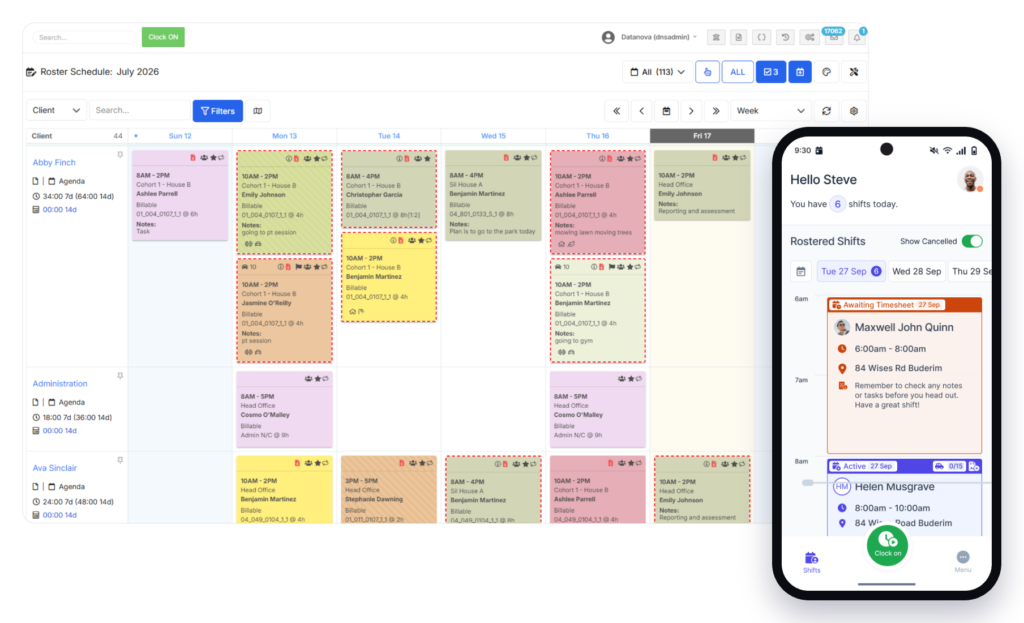
Delivering quality aged care depends on having the right staff in the right place at the right time. FlowLogic’s rostering tools are built for the demands of care environments, including skill and qualification matching, shift management, and award-based compliance alerts. Workforce analytics also provides insight into staffing efficiency, helping managers make better decisions about resource allocation.
For home-based and community care providers in particular, FlowLogic offers a comprehensive solution that removes the administrative burden of managing aged care funding, so teams can focus on what matters most: delivering quality, person-centred care.
To learn more or book a free demo, visit flowlogic.com.au.
Getting Started with Aged Care Funding
Australia’s aged care system is built on the principle that every older Australian deserves access to quality care and support. The Australian Government funds a substantial share of these costs, with individuals contributing based on their means. Whether you need support at home or in a residential aged care facility, there is a funded pathway available to you.
Starting the process early. Starting before a crisis occurs gives you more time to explore your options, choose the right provider, and plan financially. If you are unsure where to start, My Aged Care is an excellent first point of contact, and aged care financial advisers can also help you understand your obligations and entitlements.